Sunday Sauce For The Soul: Why Slow Cooking Builds Both Food And Life
Your kitchen is a meditation hall.
Your wooden spoon is prayer beads. Your simmering pot is temple.
But you’ve forgotten.
You rush through cooking like it’s another task to check off. Microwave this. Order that. Grab something quick.
Meanwhile, Italian nonnas spend their Sundays stirring sauce for six hours. Not because they have to. Because they understand something you’ve lost.
Slow cooking isn’t just about food. It’s about time. Intention. Presence. Building something that nourishes body and soul.
The Ritual of Sunday Sauce: More Than Food
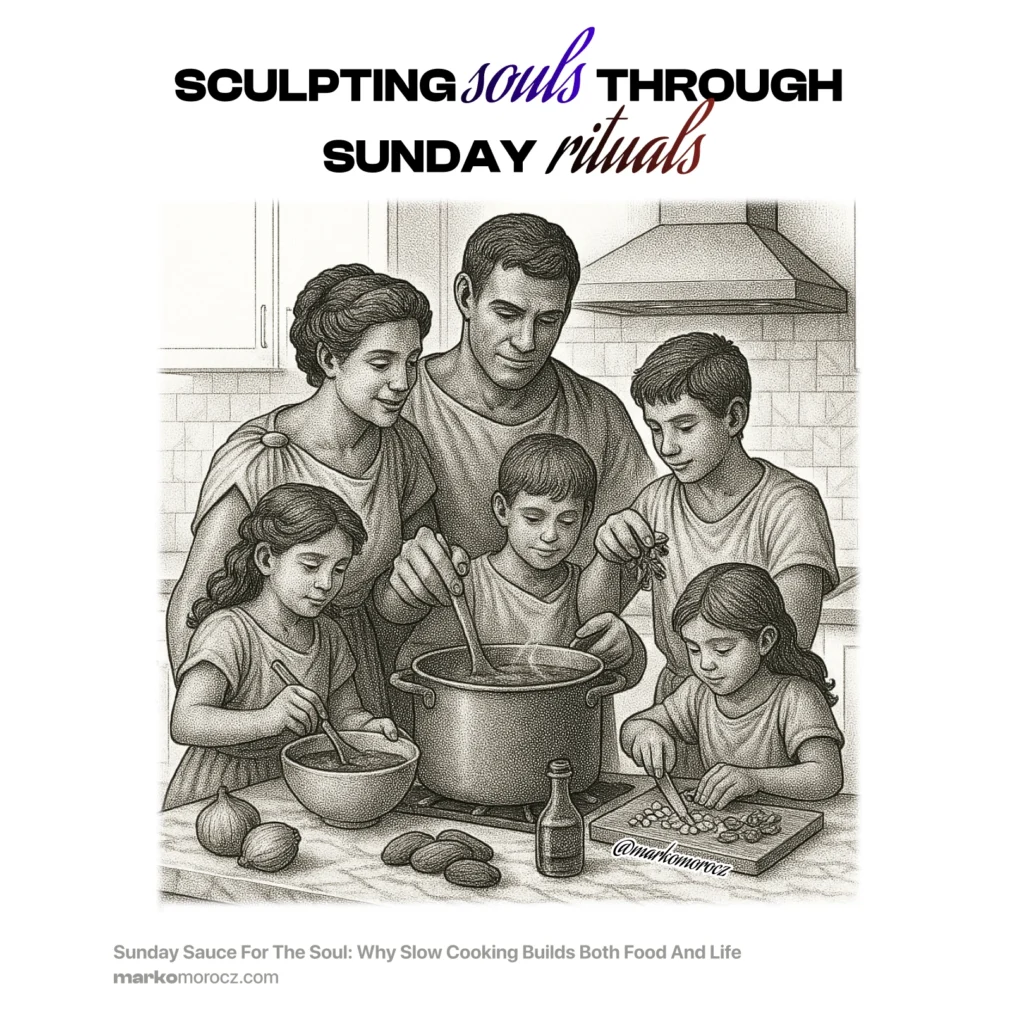
Sunday sauce. Sugo della domenica. It isn’t just dinner. It’s ceremony.
Italian families gather. Multiple generations. Stories flow. Children learn. Adults connect. Elders pass wisdom.
The sauce simmers. The family bonds. Time moves differently.
This isn’t about efficiency. It’s about intentionality. Creating space for what matters. Connection. Tradition. Presence.
Modern life forgot this wisdom. We traded soul food for fast food. Community cooking for individual consumption. Sacred time for saved time.
The cost? More than we realize.
The Science of Slow: Why Time Changes Everything
Slow cooking isn’t just tradition. It’s chemistry.
What Happens During Long, Slow Cooking
Slow cooking transforms ingredients at the molecular level. Creates depth which is impossible to achieve with quick methods.
- Maillard Reactions: Complex flavor compounds develop over hours
- Collagen Breakdown: Tough connective tissues become silky gelatin
- Flavor Concentration: Water evaporation intensifies taste
- Aromatic Development: Volatile compounds create depth and complexity
- Nutrient Enhancement: Slow heat preserves and concentrates vitamins
- Digestibility Improvement: Proteins and fibers become more bioavailable
The Neuroscience of Repetitive Cooking
- Meditative State: Repetitive stirring activates parasympathetic nervous system
- Stress Reduction: Cooking rituals lower cortisol by 23%1
- Present Moment Awareness: Sensory engagement pulls you into now
- Achievement Satisfaction: Creating something nourishes dopamine pathways
- Social Connection: Shared cooking builds oxytocin and bonding
You’re not just making sauce. You’re rewiring your nervous system. For calm, connection, and presence.
While you’re rewiring your nervous system, you’re simultaneously optimizing your nutrition.
Cooking tomatoes for 30+ minutes boosts lycopene bioavailability by 300%2, long cooking concentrates antioxidants, and gentle heat preserves beneficial compounds while making proteins more digestible.
The Classic Sunday Sauce: A Six-Hour Journey
This isn’t a recipe. It’s meditation. A practice. A commitment to slowing down and being present.
The Sacred Ingredients
This recipe serves 4-5 people generously, with enough sauce for 1.1 lbs (500g) of pasta.
- San Marzano tomatoes: 2 cans (28oz/800g each) – the gold standard
- Olive oil: 3 tablespoons extra virgin – liquid gold
- Garlic: 4 cloves, sliced thin – aromatic foundation
- Onion: 1 medium, diced fine – sweet base
- Carrot: 1 large, grated – hidden sweetness
- Celery: 1 stalk, minced – aromatic depth
- Fresh basil: 3/4 bunch – bright finish
- Sea salt: To taste – mineral enhancement
- Black pepper: Fresh ground – warm spice
- Red wine: 1/3 cup good quality – depth and complexity
- Pasta: 1.1 lbs (500g) – your choice of shape
Optional Protein Additions
- Italian sausage: 1 lb (450g), sweet and/or hot
- Meatballs: Homemade, beef and pork blend
- Braciole: Rolled, stuffed beef cutlets
- Short ribs: For ultimate richness
- Pancetta: Diced, for subtle smokiness
The Six-Hour Ritual
Hour 1: The Foundation (10:00 AM)
- Heat olive oil in heavy-bottomed pot
- Add garlic, cook until fragrant but not brown (30-60 seconds max)
- Add onion, cook until translucent (patience here)
- Add carrot and celery, cook until softened
- This is your soffritto—the soul of Italian cooking
Hour 1.5: The Protein (10:30 AM)
- If using meat, brown it in the same pot where you made soffritto
- Don’t rush—proper browning creates flavor layers
- Remove meat, leave fond (browned bits) in same pot
- Deglaze with wine, scraping up all that goodness
- Let wine reduce for 5-10 minutes
Hour 2: The Tomatoes (11:00 AM)
- Crush tomatoes by hand (feel the texture)
- Add to same pot with wine and fond
- Return meat to pot immediately if using
- Season lightly with salt and pepper
- Bring to gentle simmer
Hours 2-6: The Meditation (11:00 AM – 3:00 PM)
- Reduce heat to lowest setting
- Partial cover (let steam escape)
- Stir every 20-30 minutes (set timer)
- Taste and adjust seasoning gradually
- Watch the transformation happen—meat becomes fork-tender, flavors marry
- Use this time for conversation, reading, or simply being
Hour 6: The Finishing (3:00 PM)
- Taste for final seasoning adjustments
- Add fresh basil in final 10 minutes
- Let rest off heat for 10 minutes
- Serve with ceremony and gratitude
- Pro tip: Buy a wedge of real Parmigiano-Reggiano, grate it fresh at the table
This is moving meditation disguised as cooking. Kitchen alchemy that transforms more than tomatoes. It transforms you. While others chase productivity hacks, you’re practicing what matters. Presence.
The Stirring Practice
Every 30 minutes, approach your pot. Breathe in the aroma. Stir slowly. Clockwise. Taste mindfully. Add nothing unless needed. Return to your day.
This is moving meditation. Kitchen mindfulness. Sacred pause.
The Modern Application: Integrating Slow Cooking Wisdom
You don’t need to abandon modern life. You need to carve sacred space within it.
The Weekly Rhythm
Create consistent touchpoints with slow cooking throughout your week.
- Sunday: The full six-hour sauce ceremony
- Wednesday: 2-hour midweek stew or braise
- Saturday: Bread baking or slow-cooked beans
- Daily: 20-minute mindful cooking practice
The Equipment for Soul Cooking
You don’t need fancy gear. You need the right mindset and basic tools.
Choose natural materials. Stainless steel, wood, and ceramic is your style. They conduct heat better. They avoid toxic chemical leaching from plastics and non-stick coatings. They connect you to generations of cooks before you.
Essential Equipment:
- Heavy-bottomed pot: Even heat distribution, prevents burning
- Wooden spoon: Won’t scratch, connects you to tradition
- Cutting board: Stable workspace for mindful prep
- Sharp knife: Clean cuts release proper flavors
- Timer: Gentle reminders for stirring meditation
Your most important tool is time. Not clock time. Sacred time. Protected time. Intentional time.
Block it on your calendar like the most important meeting of your week. Because it is.
The Nutritional Bonus: Slow-Cooked Health
While you’re healing your soul, you’re also optimizing your health.
Nutrient Enhancement
- Lycopene increase: Cooking tomatoes for 30+ minutes boosts bioavailability by 300%2
- Antioxidant concentration: Long cooking concentrates beneficial compounds
- Fiber breakdown: Makes nutrients more accessible
- Mineral absorption: Slow cooking enhances mineral bioavailability
Digestive Benefits
- Protein pre-digestion: Long cooking breaks down complex proteins
- Reduced anti-nutrients: Heat neutralizes compounds that block absorption
- Gentle processing: Easier on digestive system than raw foods
- Satiety enhancement: Complex flavors increase meal satisfaction
Mental Health Support
- Omega-3 preservation: Gentle heat protects beneficial fats
- B-vitamin retention: Low-temperature cooking preserves nutrients
- Stress hormone reduction: Cooking ritual lowers cortisol
- Social connection: Shared meals support mental health
The Sauce Variations: Honoring Regional Traditions
Once you master the foundation, explore regional expressions.
Classic Simple (Pomodoro)
The foundation. Perfect in its simplicity.
- Dice onions, shallots, or garlic
- Sauté in quality olive oil for 7-8 minutes low heat
- Add cut tomatoes, cook minimum 30 minutes
- Season with salt and fresh basil (add twice—during cooking and at finish)
- Optional: touch of sugar for balance
- Serve chunky or blend smooth
Roman Style (Amatriciana Base)
- Add guanciale (cured pork jowl)
- Include chili flakes for heat
- Finish with pecorino romano
- Serve with bucatini pasta
Neapolitan Style (Puttanesca Influence)
- Add olives, capers, anchovies
- Include extra garlic and herbs
- Brighter, more aggressive flavors
- Serve with spaghetti
Tuscan Style (Countryside Richness)
- Include red wine and herbs
- Add carrots for sweetness
- Use wild boar if available
- Serve with pappardelle
Sicilian Style (Caponata Inspiration)
- Add eggplant and pine nuts
- Include golden raisins
- Sweet and sour balance
- Serve with rigatoni
Your Sunday Sauce Journey: The 12-Week Protocol
Weeks 1-3: Foundation Building
- Master basic tomato sauce
- Establish Sunday ritual
- Practice patience and presence
- Document process and feelings
Weeks 4-6: Technique Refinement
- Add proteins to sauce
- Experiment with herbs and seasonings
- Invite others to join process
- Build confidence and skills
The Generational Gift: Teaching the Next Wave
The greatest tragedy isn’t burning dinner. It’s losing the wisdom of slow cooking.
Teaching Children
Start young and build skills progressively.
- Age 3-5: Washing vegetables, tearing herbs
- Age 6-8: Measuring ingredients, safe stirring
- Age 9-12: Knife skills, flavor tasting
- Age 13+: Full recipe responsibility, teaching others
Preserving Knowledge
Document the wisdom before it disappears.
- Document recipes: Write down family variations
- Record stories: Capture the history behind dishes
- Take photos: Visual documentation of techniques
- Create traditions: Establish new family customs
Building Legacy
Create lasting connections through food.
- Pass down equipment: Wooden spoons, copper pots
- Share techniques: Hand-to-hand knowledge transfer
- Create memories: Food-centered family gatherings
- Honor ancestors: Keep their recipes alive
The Bottom Line: Sauce for the Soul
Sunday sauce isn’t about the sauce.
It’s about choosing slow in a fast world. Choosing presence over productivity. Choosing connection over convenience.
It’s about understanding that the best things in life—relationships, health, wisdom, joy—can’t be rushed.
They must be cultivated. Tended. Stirred gently. Given time to develop.
Start this Sunday. Six hours. Sacred rebellion. Simple ingredients that sculpt something eternal. Your wooden spoon is calling. Your soul needs feeding.
Transform more than tomatoes. Transform yourself.
Buona domenica, anima bella. (Good Sunday, beautiful soul.)
What memories will you stir into your Sunday sauce? Share your slow cooking gems below.
References
- Farmer, N., et al. (2018). “Psychosocial benefits of cooking interventions: a systematic review.” Health Education & Behavior, 45(2), 198-205. ↩︎
- Dewanto, V., et al. (2002). “Thermal processing enhances the nutritional value of tomatoes by increasing total antioxidant activity.” Journal of Agricultural and Food Chemistry, 50(10), 3010-3014. ↩︎
- Dewanto, V., et al. (2002). “Thermal processing enhances the nutritional value of tomatoes by increasing total antioxidant activity.” Journal of Agricultural and Food Chemistry, 50(10), 3010-3014. ↩︎