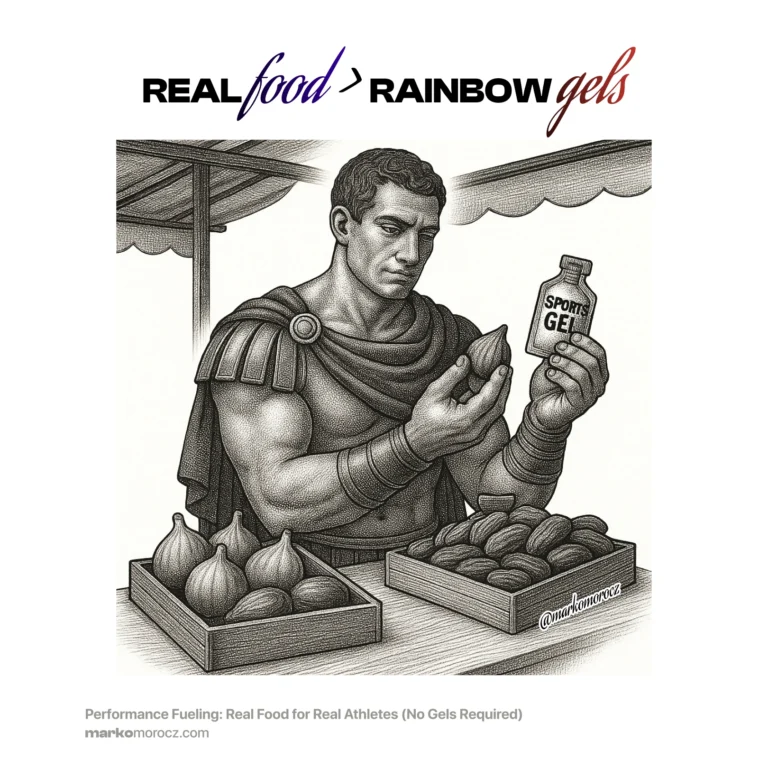
The Twin Killers of Happiness: Uncertainty & Dissatisfaction
Happiness isn’t complicated.
But it is heavily guarded.
Two vicious gatekeepers stand between you and joy:
- Wanting things to be different
- Uncertainty about the future
These aren’t minor obstacles. They’re the twin engines of human misery.
The First Killer: Wanting Change
Happiness is the state when nothing is missing. When nothing is missing, your mind shuts down and stops running into the past or future to regret something or to plan something.
—Naval Ravikant
This is brutal truth: If you want the world to be different than it is, you’ve outsourced your happiness.
You’ve placed it in the hands of external circumstances.
You’ve told yourself: “I’ll be happy when…”
- When I get the promotion
- When I lose the weight
- When they apologize
- When the market recovers
- When the election goes my way
This is happiness hostage-taking. You’ve kidnapped your own joy and demanded reality pay the ransom.
But reality doesn’t negotiate.
The Resistance Tax
Every moment spent wishing things were different is a moment taxed from your life.
It’s not just mental discomfort. It’s biological warfare against yourself.
Resistance to reality triggers:
You’re not just unhappy. You’re physically poisoning yourself.
The cost? Years of your life.
The One-Minute Pain, Years of Suffering Paradox
Here’s where it gets truly insane:
We often remain in years of misery to avoid a few minutes of pain.
The difficult conversation? Five minutes. The career change? One uncomfortable resignation. The relationship decision? One honest discussion. The health commitment? One moment of choosing differently.
Yet we’ll endure years—sometimes decades—of quiet suffering to avoid these brief moments of acute discomfort.
This isn’t strength. It’s fear masquerading as patience.
The Second Killer: Uncertainty
Humans never genuinely pursue happiness. They only pursue relief from uncertainty. Happiness emerges momentarily as a byproduct whenever uncertainty briefly disappears.
Your brain isn’t designed for happiness. It’s designed for survival.
And to your survival-oriented brain, uncertainty is more threatening than certain negative outcomes.
Studies show people prefer receiving a definite electric shock now over a 50% chance of shock later.7
Think about that. We prefer guaranteed pain over uncertain outcomes.
The Prediction Addiction
Your mind abhors not knowing. So it creates illusions of certainty:
- Worst-case scenarios (to feel prepared)
- Constant planning (to feel in control)
- Rumination (to feel like you’re solving something)
- Worrying (to feel like you’re taking action)
None of these create certainty. But they create the temporary feeling of it.
It’s a cognitive drug that provides momentary relief while making the addiction worse.
The Nightmare Comfort Zone
Worrying about the thing you can’t predict involves a nightmare fantasy, which is almost always worse than reality. But this imagined nightmare briefly packages the chaos of the world into certainty.
This is how desperately your brain craves predictability.
It would rather imagine a catastrophe than embrace uncertainty.
The certain nightmare feels safer than the uncertain reality. Even though the nightmare is completely fictional.
It’s madness. But it’s human.
When The Killers Team Up
The most brutal suffering occurs when these forces combine:
- A family member gets an uncertain diagnosis (uncertainty) and you wish it weren’t happening (wanting change)
- Your relationship hits turbulence (wanting different) and you don’t know where it’s heading (uncertainty)
- You lose your job (wanting different) and don’t know how you’ll pay bills (uncertainty)
These combinations create perfect storms of psychological suffering.
The 80/20 of Happiness Recovery
Breaking free isn’t about positive thinking or manifestation.
It’s about recognizing and dismantling these twin delusions:
- Reality Acceptance Protocol
- Identify what you’re fighting against
- Ask: “Can I directly change this right now?”
- If yes: Take immediate action
- If no: Practice radical acceptance
- Convert wishing energy into adaptation energy via evaluating your stressors by controllability
- Uncertainty Tolerance Training
- Identify where you’re craving certainty
- Ask: “What am I pretending to know about the future?”
- Replace prediction with preparation
- Focus on your response capability, not outcome control
- Practice deliberate uncertainty exposure
The Acceptance Paradox
The ultimate twist? Accepting reality doesn’t mean giving up.
It means engaging with what is, not what should be.
Accepting reality is the foundation for changing it.
You can’t effectively change what you haven’t first accepted.
The Uncertainty Advantage
Embracing uncertainty isn’t surrender. It’s freedom.
It releases you from the exhausting burden of prediction. It opens you to opportunities you couldn’t have planned for. It allows you to respond to what’s actually happening, not what you feared might happen.
The most successful people aren’t better predictors. They’re better responders.
Your Next Step
If you’re feeling unhappy right now, ask:
- Where am I wanting reality to be different?
- Where am I craving certainty about the future?
Then make your choice:
Continue feeding the two-headed monster of unhappiness. Or starve them through acceptance and uncertainty tolerance.
The gap between you and happiness isn’t circumstantial. It’s psychological.
And that means it’s within your control.
References
- Keller, A., et al. (2018). “Extreme stress resulted in a nine-fold increase in cortisol compared with in relaxed periods.” Medical News Today. ↩︎
- StatPearls Publishing. (2024). “Physiology, Stress Reaction – The endocrine system increases the production of steroid hormones, including cortisol, to activate the body’s stress response.” NCBI Bookshelf. ↩︎
- Cells Journal. (2023). “The Role of Cortisol in Chronic Stress, Neurodegenerative Diseases, and Psychological Disorders – Social conflicts and stress activate the sympathetic nervous system and release norepinephrine, which upregulates proinflammatory immune response genes IL-1, IL-6, and TNF.” MDPI. ↩︎
- StatPearls Publishing. (2024). “Physiology, Stress Reaction – Chronic stress elicits a cascade of physiological responses, including increased secretion of stress hormones such as cortisol and catecholamines, which impact the musculoskeletal system.” NCBI Bookshelf. ↩︎
- Kim, E. J., & Dimsdale, J. E. (2007). “The Effect of Psychosocial Stress on Sleep: A Review of Polysomnographic Evidence – Experimental stress resulted in fairly consistent changes: decreases in slow wave sleep, REM sleep, and sleep efficiency, as well as increases in awakenings.” PMC. ↩︎
- Alhola, P., & Polo-Kantola, P. (2007). “Sleep deprivation: Impact on cognitive performance – Both total and partial sleep deprivation induce adverse changes in cognitive performance, impairs attention and working memory.” PMC. ↩︎
- de Berker, A. O., et al. (2016). “Computations of uncertainty mediate acute stress responses in humans” Nature Communications, 7, 10996.
Electric Shock Uncertainty Study: The specific study you referenced was conducted by researchers at University College London and published in Nature Communications. The study found that situations where subjects had a 50% chance of receiving an electric shock were the most stressful, while 0% and 100% chances were the least stressful. The experiment involved 45 volunteers who played a computer game where they turned over rocks that might have snakes under them, receiving mildly painful electric shocks when snakes were present. ↩︎